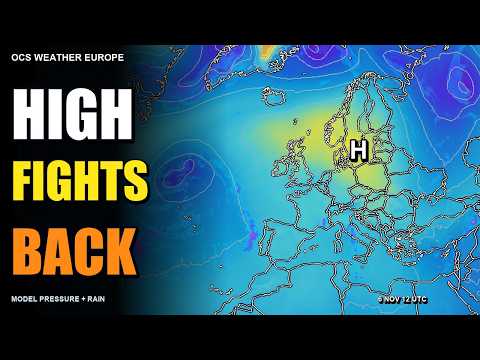
A later run, the same forecast target
The episode follows the ridge and the Atlantic into 6–12 November, with regional contrasts across northern and central Europe and around the Mediterranean. Its main guidance comes from the GFS run initialised at 00:00 UTC on 5 November.
For Monday 9 November, the programme compares that Thursday run with the retained Tuesday run from 3 November, matched to the same forecast valid time. This asks how the prediction changed as the target moved closer. It cannot establish which forecast was right without a separate comparison against observations.
Read each quantity with its label
A high-pressure pattern can hold fronts away from one region while places around its edges experience different conditions. The position and extent of the ridge matter alongside its pressure: a single headline cannot describe every location under or near it.
The published programme distinguishes 10-metre mean wind from exposed-coast gust maxima, and instantaneous rain intensity from accumulated rainfall. A gust is not an average wind, and an accumulated amount needs its stated time window. Keep those labels attached before comparing numbers or applying them to plans.
Two GFS runs also do not supply an ensemble probability or a fresh ECMWF comparison. Ensemble guidance explores a range of possible outcomes; this episode's matched-run example instead illustrates a forecast revision.
Warnings keep their own clock
The publisher added a correction checked on 5 November at 11:17 UTC to the recorded AEMET warning start time for western La Palma. Read that correction with the episode, and use AEMET or the relevant national service for newer advice. The dated panel is a publication snapshot, rather than a continuously updated warning feed.
Sources & further reading
Independent background for the ideas explored on this page.
- OCS Weather Europe — official forecast, run times and dated warning correction
- NOAA/NCEP — Global Forecast System numerical guidance
- ECMWF — Ensemble uncertainty, background to interpreting forecasts
- Met Office — High pressure, blocking and regional contrasts
- AEMET — Official meteorological warning information


